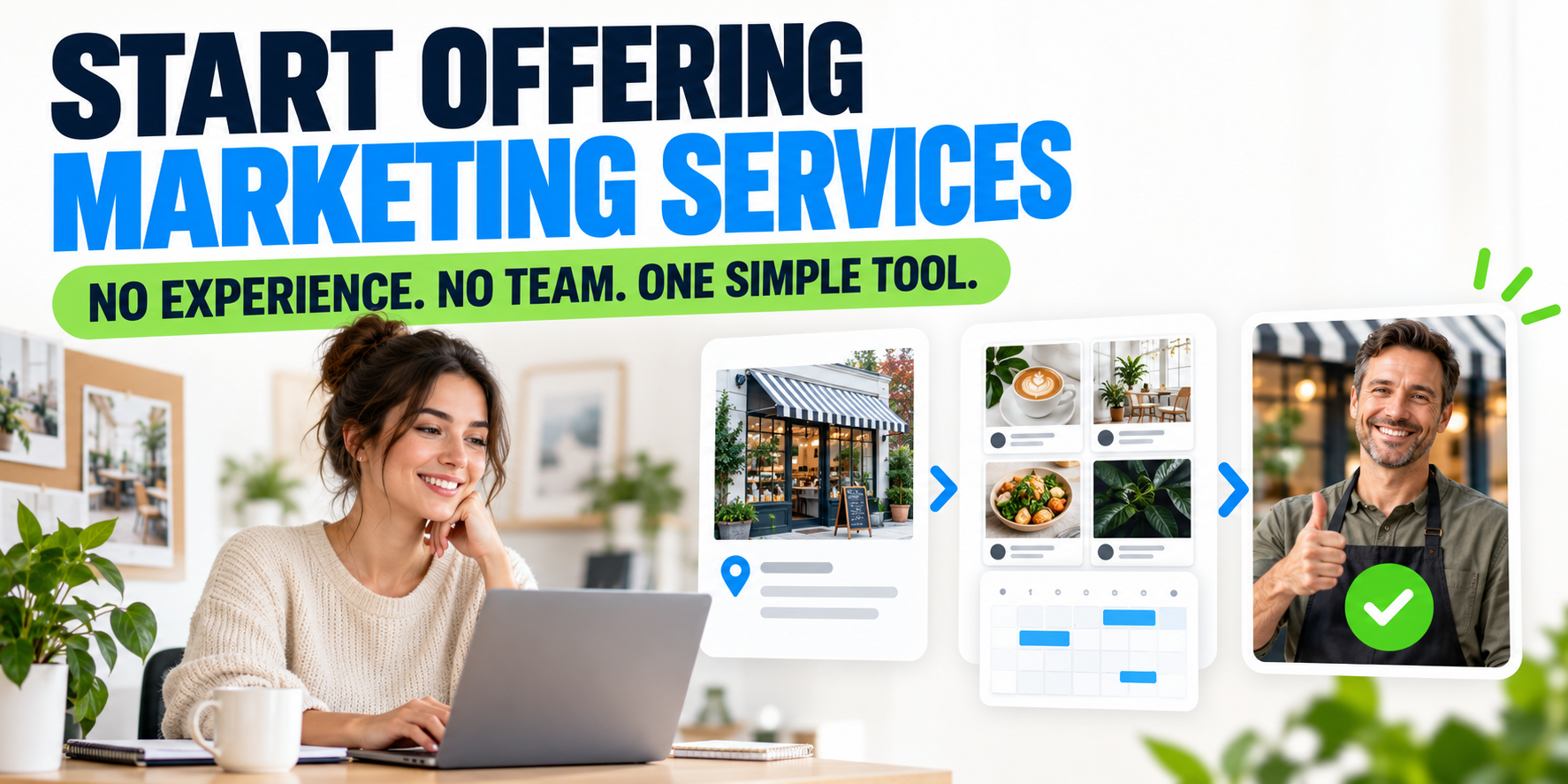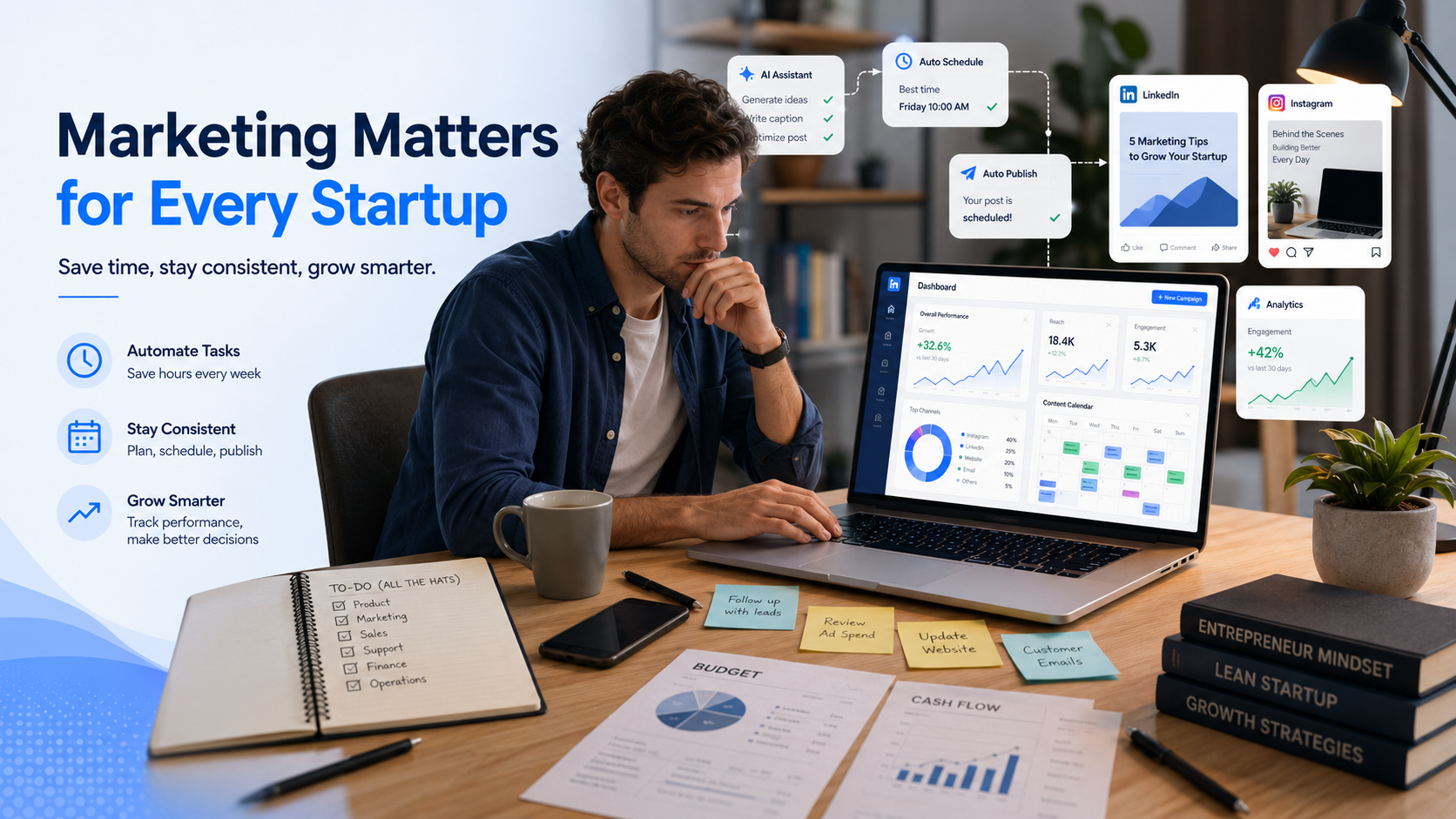
Starting a small business usually means becoming responsible for everything at once.
You must develop the product or service, communicate with customers, manage payments, solve operational problems, prepare offers, answer messages, update the website, and somehow find enough time to market the business.
Marketing is often the first responsibility that gets delayed.
The owner knows that the business needs regular social media posts, promotional campaigns, videos, emails, customer follow-ups, and new lead generation. However, when the working day is already full, marketing becomes something that is done only when there is free time.
The result is an inconsistent online presence.
The business publishes several posts during its launch, becomes quiet for two weeks, promotes an offer at the last moment, and misses potential customers who are actively looking for its services.
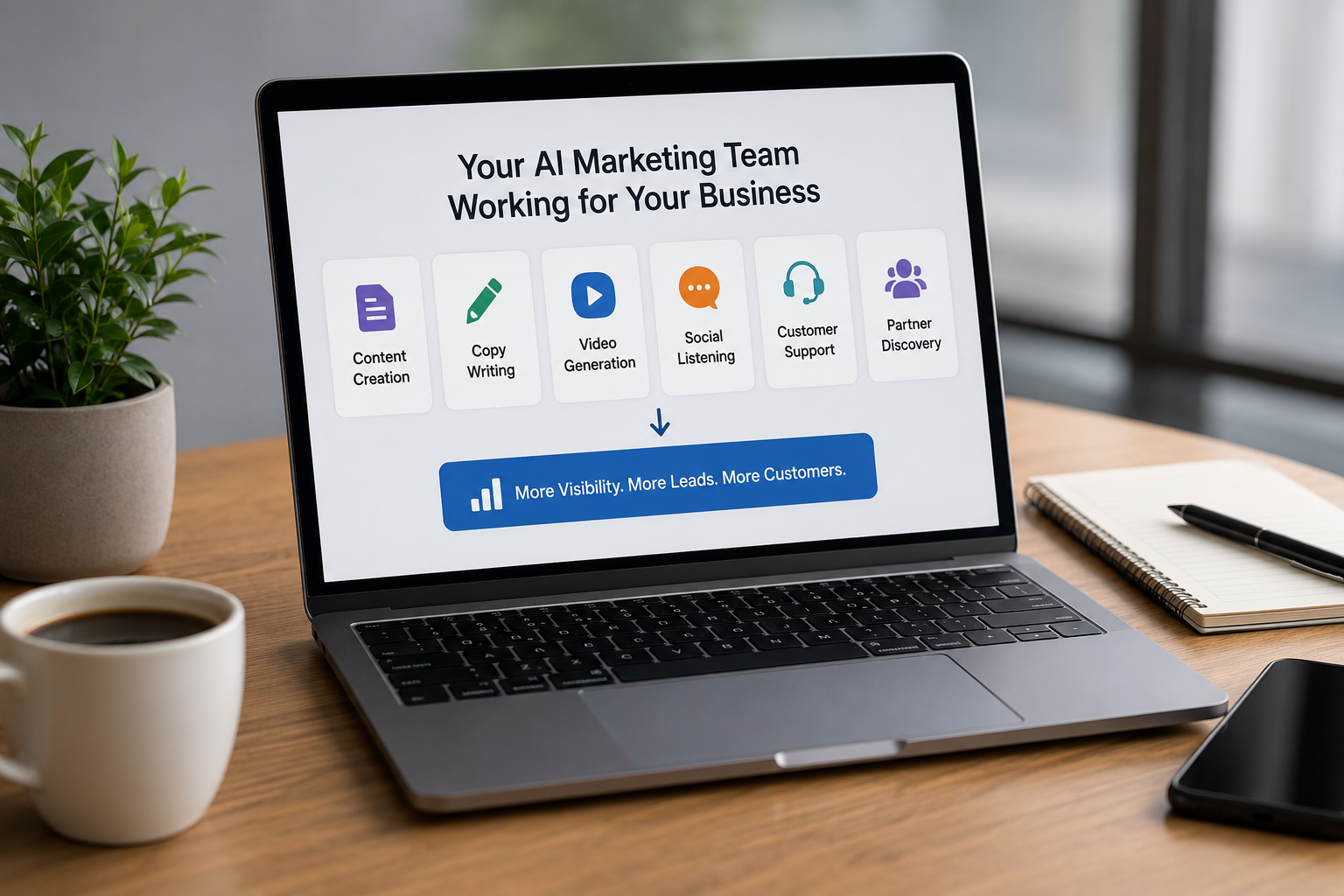
AutoMarketing AI is designed to solve this problem by giving small businesses a group of specialized AI marketing agents that can plan campaigns, create content, generate videos, prepare marketing copy, monitor conversations, discover potential partners, support customers, and organize everything through one shared Brand Brain. The business owner remains in control by reviewing, editing, approving, and scheduling the work before it is published.
Instead of asking a new entrepreneur to become a full-time marketer, the platform helps them build a repeatable marketing operation around the business they are already running.
The Real Marketing Problem for a New Business
A new business does not normally suffer from a lack of ideas.
The owner may already know that they need to:
- Introduce the business
- Explain the service
- Show the product
- Answer common questions
- Share customer results
- Promote an opening offer
- Publish educational content
- Create short videos
- Contact potential partners
- Respond to comments and messages
- Find people who may need the service
The difficult part is turning those ideas into a consistent system.
A business owner may write a Facebook post today, create an Instagram image tomorrow, and then stop publishing because customer work becomes more urgent. Every marketing task starts from zero, which creates a constant cycle of brainstorming, writing, editing, designing, and scheduling.
Generic AI chat tools can help generate individual pieces of content, but they still require the owner to explain the business repeatedly. They may use the wrong service details, invent prices, misunderstand the target audience, or produce copy that does not sound like the brand.
AutoMarketing AI approaches the problem differently.
The platform stores the company’s information inside a Brand Brain. Its marketing agents then use that knowledge when creating posts, advertisements, emails, videos, customer replies, and campaigns. This allows the owner to build the marketing foundation once and reuse it across the entire platform.
Imagine a Typical Small Business Owner
Consider a person who has just opened a local cleaning company.
The owner may have:
- A basic website
- A Facebook page
- An Instagram account
- Three cleaning packages
- Several photographs
- A launch discount
- A small advertising budget
- No marketing employee
- No content calendar
- No time to post every day
Without a system, the owner must personally decide what to publish, write every caption, create every image, answer every message, and remember when the next promotion should be announced.
With AutoMarketing AI, the owner can create a centralized marketing process.
They add the cleaning services, prices, locations, booking process, customer profile, frequently asked questions, and communication style to the Brand Brain. The content agents can then generate a month of posts. The Copy Agent can prepare promotional messages. The Video Agent can create short social videos. The Social Listening Agent can monitor conversations about cleaning services. The Support Agents can help answer common questions. The Partner Discovery Agent can identify complementary local businesses and potential promotional partners.
The owner does not completely abandon marketing. Instead, their role changes from producing every asset manually to reviewing and approving prepared work.
That is a much more realistic responsibility for someone who is also running the actual business.
Step 1: Build the Business Foundation Inside Brand Brain
The first and most important step is teaching the platform about the business.
Brand Brain acts as the shared knowledge base behind the AutoMarketing AI agents. It can contain website content, product or service information, prices, frequently asked questions, previous posts, email campaigns, brand guidelines, customer personas, and other business documents. The platform processes this information so its agents can reference accurate details when generating content.
A new business owner should begin with the essential information.
Business description
Explain clearly:
- What the business does
- Who it serves
- Where it operates
- What problem it solves
- Why customers should choose it
- What makes it different from competitors
A useful description should be specific.
Instead of writing:
We provide professional business services.
Write:
We provide monthly bookkeeping and financial reporting for small ecommerce companies with fewer than 20 employees. Our service helps founders understand cash flow, prepare documents, and stay organized without hiring an internal accountant.
Specific information helps the agents create more useful and believable marketing messages.
Products and services
Add every important service or product, including:
- Name
- Description
- Main benefits
- Price
- Target customer
- Delivery process
- Limitations
- Available options
- Current promotions
This prevents generated content from using outdated or incorrect information.
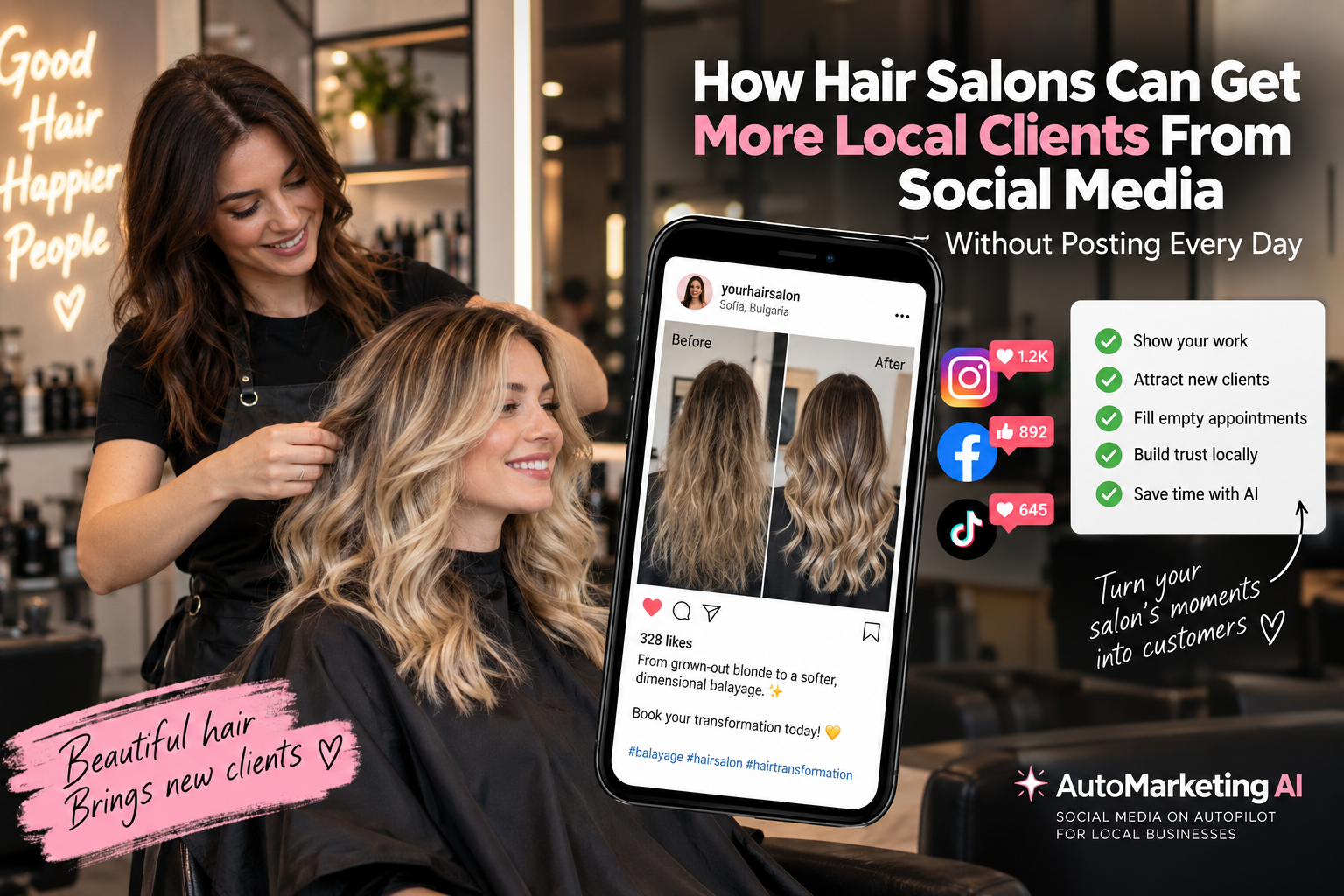
For example, a new beauty salon could add separate information for haircuts, coloring, styling, consultations, bridal services, and monthly promotions.
The marketing agents can then create different content around each service rather than repeatedly producing generic posts about the salon.
Target customers
A new business owner should explain exactly who they want to attract.
Useful details include:
- Age range
- Location
- Occupation
- Type of company
- Main problem
- Buying motivation
- Common objection
- Expected result
- Preferred communication style
A fitness coach targeting busy professionals should receive different content from a fitness coach targeting competitive athletes.
The more clearly the target audience is defined, the easier it becomes for the platform to create messages that feel relevant.
Frequently asked questions
New businesses often receive the same questions repeatedly.
Examples include:
- How much does it cost?
- How long does delivery take?
- Do you offer consultations?
- Which locations do you cover?
- Can I cancel?
- Is a deposit required?
- How do I make a booking?
- What happens after I place an order?
Uploading these answers gives both the content and support agents a better understanding of the business. AutoMarketing AI’s support features are designed to use Brand Brain information such as product details, pricing, policies, and FAQs when preparing customer responses.
Brand voice
The owner should also define how the company communicates.
A brand may be:
- Professional and authoritative
- Friendly and conversational
- Simple and practical
- Premium and elegant
- Energetic and informal
- Educational and reassuring
The owner can add previous posts, example emails, website text, or a short communication guide.
This helps prevent the common AI problem where every business sounds the same.
Step 2: Connect the Most Important Marketing Channels
A new business does not need to be active everywhere immediately.
It should begin with the channels where potential customers are most likely to spend time.
AutoMarketing AI allows businesses to connect social platforms and prepare content for different channel formats. Its website lists Facebook, Instagram, LinkedIn, X, and TikTok for direct agent publishing, while its content calendar also supports planning content for channels such as YouTube, Pinterest, Threads, Bluesky, Reddit, and Google Business.
A practical starting point could be:
Local service business
Use Facebook, Instagram, and Google Business.
Business-to-business service
Use LinkedIn, X, and Facebook.
Ecommerce store
Use Instagram, Facebook, TikTok, and Pinterest.
Consultant or coach
Use LinkedIn, Instagram, Facebook, and YouTube.
Restaurant or beauty business
Use Instagram, Facebook, TikTok, and Google Business.
The goal is not to create ten accounts and immediately fill all of them.
The goal is to establish a reliable presence on two or three important channels and expand after the workflow is working.
Step 3: Generate the First Month of Content
One of the most difficult tasks for a new owner is deciding what to publish.
AutoMarketing AI’s content calendar can generate more than 30 posts based on the business, audience, industry, and marketing goals. The owner can review posts on a visual calendar, edit the text, regenerate individual ideas, add images, move posts to different dates, and approve them for scheduling.
A well-balanced first month should not contain only promotional messages.
It should include several content categories.
Brand introduction content
These posts explain:
- Why the company was created
- What problem it solves
- Who is behind it
- What the business believes
- What customers can expect
This is important because a new company has not yet built recognition or trust.
Educational content
Educational posts help potential customers understand their problem.
A bookkeeping company could explain common cash flow mistakes.
A cleaning company could explain how frequently different surfaces should be cleaned.
A personal trainer could explain why extreme workout plans often fail.
A software agency could explain when a small company needs custom software.
Educational content demonstrates expertise without immediately asking for a sale.
Product or service content
Each service should receive its own explanation.
Instead of repeatedly posting “Book our service,” the business can publish content about:
- The problem the service solves
- How the process works
- Who the service is suitable for
- What is included
- Expected outcomes
- Common misunderstandings
- How to prepare
- Why the service is different
Objection-handling content
Potential customers may hesitate because of price, time, risk, or uncertainty.
Content can answer objections such as:
- Is this suitable for a small company?
- Is the service expensive?
- How quickly will I see results?
- Do I need previous experience?
- What happens if I am not satisfied?
- How much time will this require from me?
Answering these questions publicly reduces the uncertainty customers feel before contacting the business.
Promotional content
Promotions should have a clear reason and deadline.
Examples include:
- Opening-week offer
- Limited number of consultations
- Seasonal package
- Free first assessment
- Early customer discount
- Bonus service for the first ten bookings
The platform’s Copy Agent can generate promotional messages, advertising headlines, email sequences, landing page sections, product descriptions, and calls to action based on the business information stored in Brand Brain.
Engagement content
Not every post needs to teach or sell.
Some posts can ask questions, request opinions, present a choice, or encourage customers to share their experiences.
For example:
What is the most difficult part of keeping your home organized during a busy week?
The responses can provide useful customer research while increasing interaction.
Step 4: Review the Calendar Instead of Creating Posts Daily
The biggest practical advantage for a busy owner is batch approval.
Instead of finding time every day to create marketing content, the owner can reserve one short review session each week.
During this session, they can:
- Open the marketing calendar.
- Review the scheduled posts.
- Correct any business details.
- Adjust the tone.
- Replace weak ideas.
- Approve the final content.
- Confirm the publishing schedule.
AutoMarketing AI allows individual posts to be edited, rejected, regenerated, approved, and scheduled before publication. This keeps the owner in control while reducing the amount of production work they must perform personally.
This approval workflow is particularly important for a new business.
The owner is still developing the company’s positioning. They may discover that customers respond better to one service, one message, or one type of content. Reviewing the generated work helps them improve both the marketing and the business itself.
Step 5: Use the Copy Agent for Daily Business Needs
Marketing is not limited to social media.
A new business constantly needs written material.
The AutoMarketing AI Copy Agent can create different versions of:
- Advertising copy
- Email campaigns
- Social media captions
- Landing page sections
- Product descriptions
- Blog introductions
- Calls to action
- Promotional messages
The owner provides a brief describing the format, target audience, offer, and main message. The agent generates multiple variations that can be reviewed, combined, copied, exported, or added to the marketing calendar.
This can be useful throughout the business launch.
Website launch
The owner can prepare:
- Homepage headlines
- Service descriptions
- Benefit sections
- About-page content
- Frequently asked questions
- Booking calls to action
First promotion
The owner can generate:
- Facebook advertising text
- Instagram captions
- Email announcements
- Website banners
- Short promotional messages
- Follow-up emails
Lead follow-up
The owner can create:
- Initial introduction emails
- Follow-up messages
- Consultation reminders
- Proposal summaries
- Customer reactivation messages
Product launch
The Copy Agent can prepare:
- Product announcements
- Feature explanations
- Launch emails
- Advertising angles
- Product page descriptions
- Social campaign posts
This makes the platform useful beyond scheduled posting. It becomes a practical writing assistant for many customer-facing parts of the new business.
Step 6: Create Video Content Without Building a Production Team
Short video can help a new company demonstrate its service, introduce its brand, explain a product, or promote an offer.
However, traditional video production may require recording equipment, suitable locations, editing software, actors, voiceovers, and considerable time.
AutoMarketing AI includes a Video Agent that turns text descriptions into marketing videos. The owner can describe the required scene, style, mood, format, and message. The platform supports vertical, square, and horizontal output for different social platforms, and generated videos can be downloaded or added to the content calendar.
A new owner could use the Video Agent for:
- Business introductions
- Service explanations
- Product demonstrations
- Promotional announcements
- Educational tips
- Customer success stories
- Frequently asked questions
- Seasonal campaigns
- Social advertisements
For example, a new online accounting service could request:
Create a short vertical video showing a stressed small business owner surrounded by invoices, followed by an organized dashboard and a message explaining how monthly bookkeeping saves time.
A children’s education center could request:
Create a friendly vertical video showing children learning through creative activities, with short text explaining the center’s programs and enrollment offer.
The owner can test different video concepts without organizing a complete production process for each idea.
Step 7: Monitor Conversations and Find Potential Customers
Publishing content is only one side of marketing.
The other side is discovering existing conversations where people are already discussing their problems.
AutoMarketing AI’s Social Listening Agent can monitor brand names, products, competitors, industry phrases, and relevant keywords. Detected mentions can be categorized by sentiment and type, including praise, questions, complaints, and potential opportunities. The platform can also suggest responses that the owner may approve or edit.
This is especially valuable for a new business that does not yet have a large audience.
A new company cannot rely only on people discovering its profile. It must actively identify conversations where it can contribute.
Example for a local cleaning company
The owner could monitor phrases such as:
- Looking for a cleaner
- Cleaning company recommendation
- Office cleaning
- Move-out cleaning
- Cleaning service in Sofia
When someone publicly asks for a recommendation, the owner can respond quickly with a helpful message.
Example for a software consultant
The owner could monitor:
- Need a Laravel developer
- Looking for a software agency
- Manual process automation
- Need a custom CRM
- Alternative to spreadsheets
The platform can surface relevant conversations and help prepare contextual responses.
Example for a fitness coach
Monitoring phrases could include:
- Need an online trainer
- Struggling to lose weight
- Fitness plan for busy professionals
- Looking for accountability coach
The correct approach is not to spam every detected conversation.
The business should provide a useful and relevant response, demonstrate understanding, and mention its service only when appropriate.
Step 8: Handle Repetitive Customer Questions Faster
New business owners often answer messages personally.
This provides valuable customer insight, but it can also become repetitive.
Customers frequently ask about prices, availability, locations, delivery, refunds, bookings, and service details.
AutoMarketing AI’s Support Agents can use information from Brand Brain to prepare responses for customer inquiries across connected messages, comments, and direct communication channels. The owner can define tone preferences, escalation rules, response boundaries, and the types of questions the AI should handle or forward for human attention.
For a new business, the safest workflow is to begin with approval-based replies.
The AI prepares an answer, but the owner reviews it before sending.
This gives the owner three advantages:
- Responses are prepared faster.
- Customers receive more consistent information.
- The owner can identify missing information in the Brand Brain.
For example, if the AI cannot answer a delivery question correctly, the owner can add the complete delivery policy. Future responses and content can then use the updated information.
Over time, this creates a more complete knowledge base for the business.
Step 9: Find Partners Instead of Growing Alone
A small business does not always need to build its audience entirely through advertising.
Partnerships can provide faster access to relevant customers.
AutoMarketing AI includes a Partner Discovery Agent that helps identify affiliates, influencers, creators, and potential brand partners based on audience alignment, engagement, content quality, and campaign goals. It can also generate outreach templates for selected partners.
A small local business could search for:
- Nearby complementary businesses
- Local content creators
- Community pages
- Industry specialists
- Referral partners
- Event organizers
- Small influencers with relevant audiences
Examples include:
- A wedding photographer partnering with makeup artists
- A fitness coach partnering with physiotherapists
- A children’s center partnering with local parent communities
- A bookkeeping service partnering with web agencies
- A cleaning business partnering with property managers
- A skincare company partnering with beauty creators
The purpose is not simply to find accounts with large follower numbers.
The owner should prioritize partners whose audience closely matches the company’s ideal customer.
A Practical First 30-Day Marketing Plan
A new business owner can use AutoMarketing AI to create a structured first month.
Week 1: Build the foundation
Add the essential business information to Brand Brain:
- Business description
- Services or products
- Prices
- Target audience
- Locations
- Frequently asked questions
- Brand tone
- Website content
- Current promotion
Connect the two or three most important social channels.
Generate the initial content calendar.
Review the first seven posts carefully because they will establish the public identity of the business.
Week 2: Explain the offer
Use the content and Copy Agents to create posts explaining:
- What the business does
- Who it helps
- How the service works
- What makes it different
- What customers receive
- How to get started
Create one simple promotional campaign with a clear call to action.
Week 3: Build trust
Create content around:
- Common customer problems
- Frequently asked questions
- Behind-the-scenes information
- Founder story
- Customer process
- Proof of expertise
- Early reviews or feedback
Generate one educational or explanatory video.
Week 4: Find opportunities
Set up social monitoring for relevant keywords.
Review potential conversations several times during the week.
Use the Partner Discovery Agent to identify possible local or industry partners.
Prepare a small outreach campaign.
Review which posts received the strongest engagement and use those insights when generating the next month.
A Simple Weekly Routine for a Busy Owner
After the initial setup, the owner should not need to spend every day managing marketing.
A practical routine could look like this.
Monday: 20-minute review
Check the content scheduled for the week.
Confirm that services, prices, dates, and promotions are accurate.
Approve the final posts.
Wednesday: 15-minute conversation check
Review important mentions, questions, and potential customer discussions.
Approve or edit suggested replies.
Friday: 20-minute performance review
Identify:
- Which posts received attention
- Which topics generated questions
- Which offer received clicks
- Which customer objections appeared
- Which messages should be reused
Add new information to Brand Brain when necessary.
End of the month: 45-minute planning session
Generate the next month of content.
Keep the strongest topics.
Replace weak formats.
Add new products, promotions, testimonials, questions, and business updates.
This creates a marketing process that can fit around business operations rather than competing with them.
Examples Across Different Types of Small Businesses
Local service company
A plumber, electrician, cleaner, repair company, or landscaping business can use the platform to publish educational tips, seasonal reminders, project examples, service explanations, customer questions, and local offers.
Social monitoring can identify people asking for recommendations, while support agents can help answer questions about service areas, availability, and pricing.
Coach or consultant
A coach can turn their experience into educational posts, short videos, lead magnets, email campaigns, and consultation offers.
The Brand Brain helps the content remain consistent with the coach’s methodology and communication style. The website specifically positions the system for coaches and consultants who want to transform their expertise into posts, offers, and lead-generation assets.
Ecommerce startup
An ecommerce owner can create product descriptions, launch campaigns, product videos, advertising angles, promotional emails, and retargeting messages.
The Brand Brain can store catalog information, prices, product features, shipping details, and return policies so generated content references the correct information.
Restaurant or café
A restaurant can build a calendar around menu items, daily offers, events, customer reviews, behind-the-scenes content, staff introductions, and seasonal promotions.
The Video Agent can create promotional clips, while social monitoring can help identify local conversations and customer feedback.
Small agency
An agency can create separate Brand Brain knowledge for different clients, helping its agents maintain distinct information and communication styles across accounts. AutoMarketing AI presents this as a workflow for small agencies managing multiple brands.
What AutoMarketing AI Does Not Replace
The platform can reduce marketing production work, but the owner still provides the direction.
The business owner remains responsible for:
- Confirming that information is correct
- Selecting the right offers
- Understanding customer feedback
- Approving important communication
- Providing real photographs and proof
- Delivering a strong product or service
- Building genuine customer relationships
- Making strategic business decisions
AI can prepare content, organize campaigns, suggest replies, and identify opportunities.
It cannot compensate for poor service, unclear pricing, broken customer processes, or an offer that does not solve a meaningful problem.
The best results will come from combining automation with real business knowledge.
Common Mistakes a New Owner Should Avoid
Uploading too little business information
Weak input produces generic output.
The Brand Brain should include real service details, target customers, prices, questions, policies, examples, and communication preferences.
Approving everything without review
Automation should save time, not remove responsibility.
Every important claim, price, deadline, and promotion should be verified before publication.
Publishing only sales posts
A new audience needs education and trust before it is ready to buy.
The calendar should combine helpful, explanatory, personal, promotional, and interactive content.
Trying to use every platform immediately
A new business should focus on the channels most relevant to its customers.
Expansion should happen after the core system is producing consistent results.
Changing the message every week
Customers need repetition before they remember a new company.
The core problem, benefit, and target audience should remain consistent even when the content format changes.
Ignoring comments and conversations
Publishing is not enough.
The owner should review responses, questions, mentions, and objections because these provide valuable information for future marketing.
Is the Platform Suitable for a Business With No Marketing Team?
This is one of the clearest use cases for AutoMarketing AI.
The platform is positioned as a single subscription containing nine marketing tools and agents, including content creation, content scheduling, copywriting, video generation, social listening, support, advertising optimization, partner discovery, lead-related functions, and Brand Brain. Its current website lists a seven-day free trial without a credit card and a subscription price of $99 per month after the trial.
For a new owner, the relevant comparison is not only between the subscription cost and doing nothing.
It should be compared with the combined cost and time required for:
- Copywriting tools
- Social scheduling software
- Graphic and video production
- Customer support preparation
- Monitoring software
- Influencer research
- Advertising copy
- Marketing planning
- Freelancers or agency services
The real value comes from consolidating these activities around one shared knowledge base and one approval workflow.
From Random Marketing to an Operating System
The most important benefit of AutoMarketing AI is not the creation of one post, one video, or one email.
It is the ability to create a repeatable marketing operating system.
The business owner builds the knowledge base once.
The agents use that information to prepare marketing assets.
The calendar organizes publication.
The owner reviews and approves the work.
Social monitoring finds relevant conversations.
Support agents help prepare customer responses.
Partner discovery identifies additional growth channels.
Performance and customer feedback improve the next marketing cycle.
This creates a process:
Plan, create, review, publish, listen, learn, and improve.
For a busy person who has just started a business, this structure can be more valuable than having access to another blank AI prompt box.
The owner does not need more disconnected marketing tasks.
They need a system that remembers the business, prepares the work, and gives them a clear place to review what happens next.
Conclusion
New business owners often postpone marketing because they believe it requires more time, knowledge, money, or staff than they currently have.
AutoMarketing AI provides another option.
It allows the owner to establish the company’s Brand Brain, connect important channels, generate a full content calendar, prepare marketing copy, create videos, monitor conversations, answer common customer questions, and discover potential partners from one platform.
The owner continues to make the important decisions, but they no longer need to create every marketing asset manually.
Instead of spending evenings wondering what to post, they can review a prepared calendar.
Instead of rewriting the same service information, they can store it once inside the Brand Brain.
Instead of missing customer conversations, they can monitor relevant keywords.
Instead of waiting until they can afford a full marketing department, they can begin building a structured marketing operation from the first month of the business.
For a busy small business owner, that is the real purpose of agentic marketing: not simply generating more content, but creating a consistent marketing process while the owner focuses on delivering the product, serving customers, and growing the company.